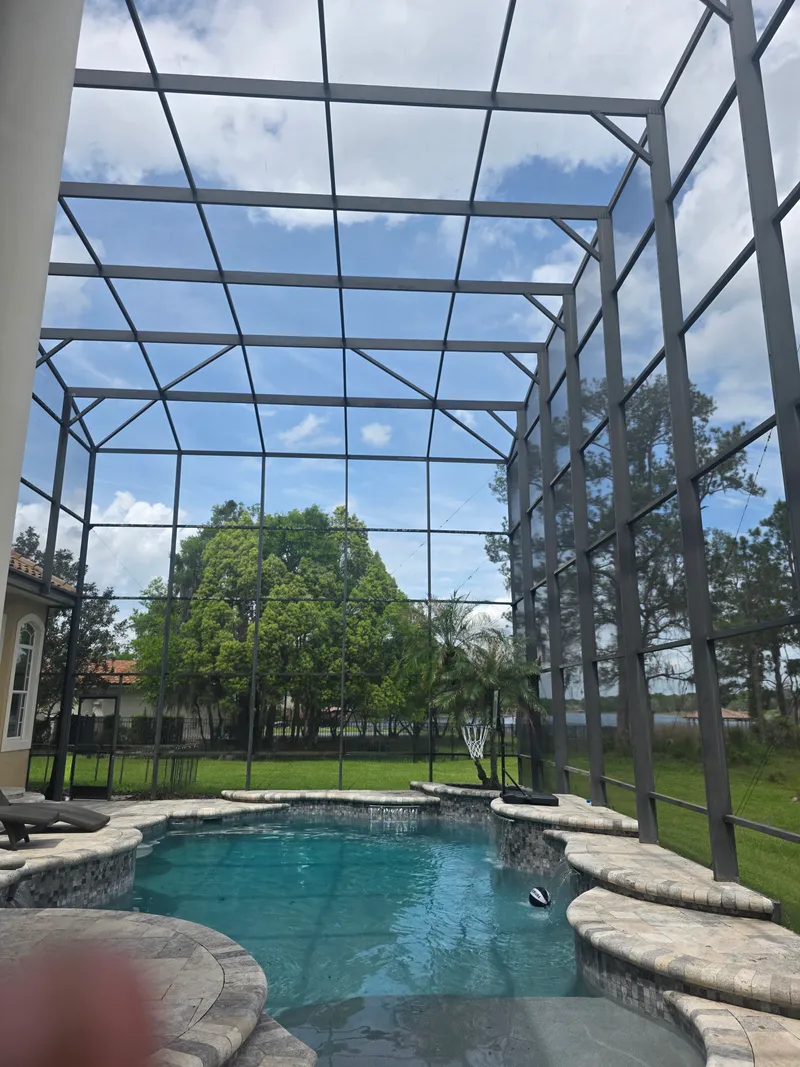
Pool cages and lanai screen enclosures in Florida should be cleaned using low-pressure soft washing, not high-pressure blasting. A biodegradable cleaning solution kills the algae and mildew that cause green buildup on screens and aluminum framing, and a gentle rinse removes it without tearing the mesh. Most Central Florida pool cages need this service every 12 to 18 months.
This guide covers why screen enclosures get dirty so fast in Florida, the right way to clean them, and how to time your cleaning for the best results.
Why Pool Cages Turn Green in Florida
The green buildup on your pool cage screens is algae. Florida’s combination of high humidity, warm temperatures, and frequent rain creates ideal growing conditions for algae and mildew on every outdoor surface, including the mesh screens and aluminum framing of your pool cage or lanai enclosure.
Several factors accelerate the growth:
- Tree canopy and shade. Enclosures under oak, pine, or palm trees stay damp longer and collect organic debris that feeds algae. Neighborhoods in Longwood and DeBary with heavy tree cover see faster buildup.
- Irrigation overspray. Sprinkler systems that hit the pool cage spray mineral-rich water onto screens, leaving deposits that algae clings to.
- North-facing panels. The side of the enclosure that gets the least direct sun stays damp longest and develops algae first.
- Proximity to water. Homes near lakes, retention ponds, or the St. Johns River in communities like Sanford and Deltona have higher ambient humidity that keeps screens wet.
How We Clean Pool Cages and Screen Enclosures
Professional pool cage cleaning uses a soft wash method: low-pressure water combined with a biodegradable cleaning solution that kills algae and mildew on contact. This is the same approach recommended by manufacturers like Phifer because it cleans effectively without putting stress on the mesh.
The process covers every part of the enclosure:
- Screen panels: every panel is treated and rinsed individually, top to bottom, inside and out.
- Aluminum framing: horizontal beams, vertical supports, and cross members are scrubbed to remove oxidation and dark streaking.
- Roof panels: the top of the enclosure collects the most debris and is often the dirtiest part. We reach it with extended soft wash equipment.
- Base channels: the bottom track where screens meet the deck collects dirt, leaves, and standing water that breeds mosquitoes. The Florida Department of Health emphasizes eliminating standing water around pool areas for this reason.
Pool cage looking green?
We clean pool cages, lanais, and screen enclosures across Volusia, Seminole, and Orange counties. Low-pressure soft wash that won’t damage your screens.
Get a Free EstimateCan You Clean a Pool Cage Yourself, or Should You Hire a Professional?
Some homeowners attempt to clean their pool cage with a garden hose or a consumer pressure washer. A garden hose can rinse loose debris but does not have the pressure or cleaning agents to remove algae that has bonded to screen mesh. Consumer pressure washers are the bigger risk. Their concentrated spray pattern can tear screens, pop spline out of channels, and damage aluminum finishes.
Professional soft washing solves both problems. The cleaning solution does the work, not water pressure. The rinse pressure is lower than a garden hose nozzle on jet setting. That’s why we can clean every panel thoroughly without risking screen damage.
The other practical issue is height. Pool cage roof panels are 12 to 20 feet off the ground and require specialized equipment to reach safely. Working from ladders inside a screen enclosure is unstable and risks falling through the roof panels.
When Is the Best Time to Clean a Pool Cage in Florida?
The best time to clean your pool cage or lanai enclosure in Central Florida is late spring or early fall. Spring cleaning, ideally in May after pollen season, removes winter and spring buildup before the summer rainy season accelerates algae growth. Fall cleaning, typically October or November, clears the summer growth and leaves your enclosure clean for the dry season when you use it most.
Many of our clients bundle pool cage cleaning with their annual house wash and driveway cleaning for a complete exterior refresh in a single visit. We serve homeowners across the area, including pressure washing in New Smyrna Beach and throughout Volusia County.